hologenX
How and why do we age?
As we get older, we encounter more and more visible and hidden signs of aging: the condition of our body and our cells reflects the passage of time. As the years go by, we face more and more challenges—our skin loses elasticity, our energy levels drop, we get tired more easily after exercise, recovery slows down, and our mental sharpness begins to decline. Aging is a natural process, so we may feel powerless. But scientific advances in recent years make it possible to influence certain aging processes and get support in slowing them down.

The goal of anti-aging = increasing Healthspan
When we think about living longer, we usually don’t mean living for a long time while frail and dependent; we mean spending as many years as possible healthy, energetic, and active—in other words, increasing our healthspan. This goal includes preserving energy as well as mental and physical functions, and maintaining an active, independent lifestyle.
Major aging processes
Advances in science and new research suggest that we may be able to influence certain aging processes. The figure below highlights key aging mechanisms.
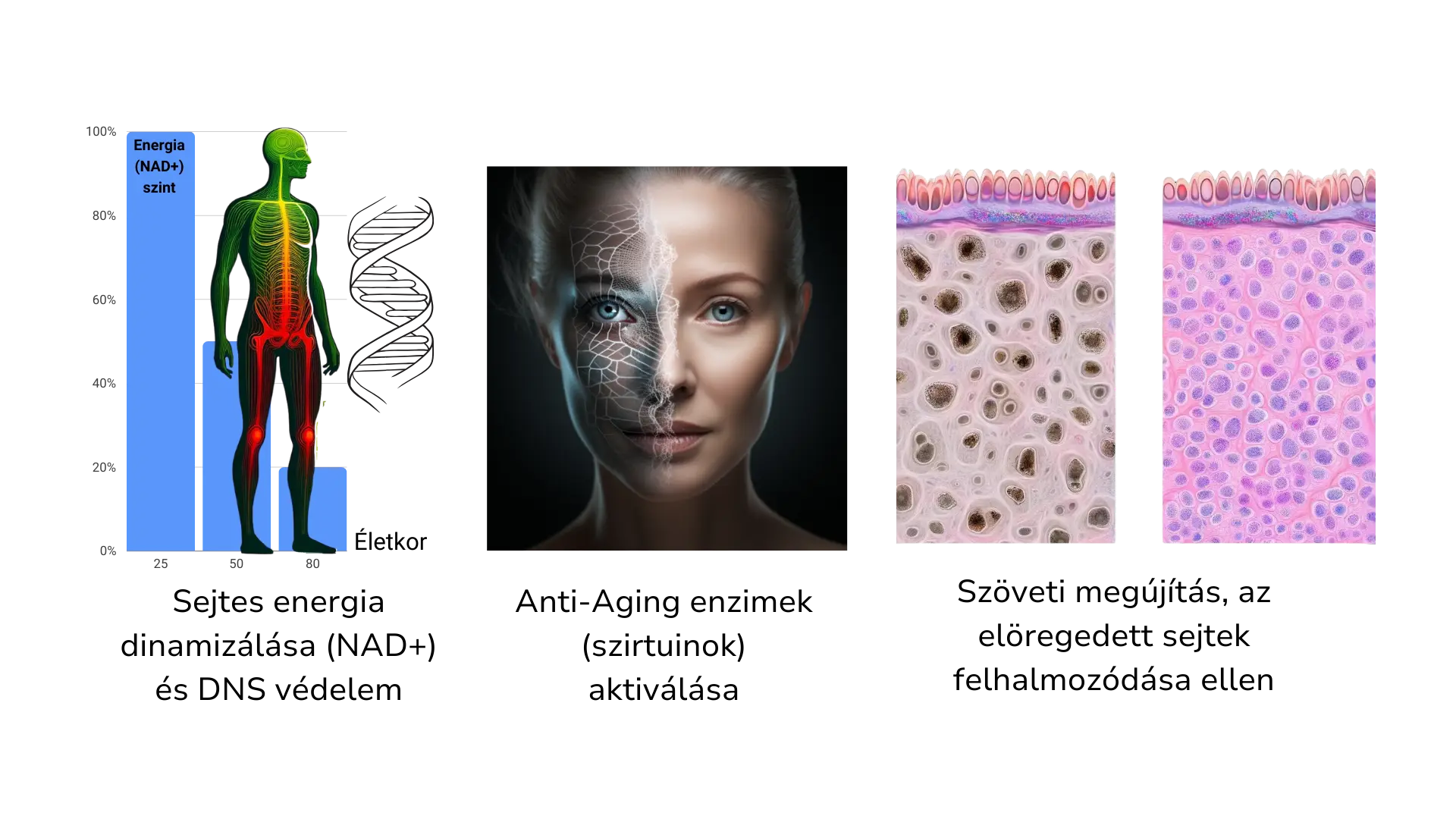
The anti-aging focus areas mentioned above are:
- Declining cellular energy
- The activity of our body’s internal anti-aging enzymes
- The body’s DNA-protection mechanism: methylation
- The aging of tissues and organs
- The age-related rise in inflammation (inflammaging, inflammatory aging)
Declining cellular energy
As we age, energy availability at the cellular level decreases. In the background is a molecule essential for life: NAD+ (nicotinamide adenine dinucleotide), whose levels decline over time.
Research is trying to identify active ingredients that can influence this effect. One such compound is the nutrient nicotinamide riboside (NR), found in small amounts in milk and yeast. In one clinical study, nicotinamide riboside increased blood NAD+ levels by up to 2.7× (Trammell et al., 2016).
Activity of anti-aging enzymes (sirtuins)
Imagine sirtuins as the guardians of our cells, playing a key role in keeping them young and healthy. These enzymes are like an internal maintenance team: they help cells function properly, support energy production, reduce inflammation, and help maintain a youthful appearance. Over time, however, these guardians become less active, which can contribute to visible signs of aging.
In recent years, researchers have studied plant compounds that may activate anti-aging enzymes. One is resveratrol, found in grapes, red wine, and some berries. Another is pterostilbene, present in blueberries and certain nuts, which may work even more effectively because it is better absorbed and more stable.
The accumulation of “zombie” (non-functional, senescent) cells
One defining process of aging is the accumulation of “zombie” (also known as senescent) cells. They form when cells are damaged by an environmental factor, lose their original function, and do not die. As more and more of these cells build up, our organs and tissues become less able to function properly, which contributes to aging and inflammation.
This process contributes to skin wrinkling, aging, and the natural decline in the efficiency of organs such as the liver and kidneys. These “zombie” cells not only cause problems directly; they also contribute to inflammatory aging, also known as “inflammaging”, which refers to the increase in inflammation levels that comes with aging.
Research is exploring natural compounds that may help remove “zombie” (senescent) cells. One such compound is apigenin, found in chamomile; another is quercetin, present in many fruits and vegetables.
Methylation and its vital role
Methylation is like internal maintenance work in our body that helps us stay younger and healthier for longer. Think of it as a defense system that protects DNA (our cells’ “operating code”), helping keep information accurate so the body can function properly. This process also reduces inflammation and helps control levels of a substance associated with aging (homocysteine), supporting our health as we get older.
The “methyl donors” required for healthy methylation provide key building blocks that are essential for the process to work. Folic acid is an excellent methyl donor (Lonn et al., 2006), but for some people it is not utilized optimally due to genetic reasons (Klerk et al., 2002). In this case, 5-MTHF, the bioactive folate may be a solution because it can be used directly by the body.
Using NAD-boosting supplements can be key to maintaining cellular energy supply and vitality. However, it’s important to know that using these without methyl donors may deplete the body’s methyl-group stores, which can be a problem. For this reason, it may be advisable to choose NAD boosters that also contain methyl donors.
Scientific background in more detail
Age-related decline in cellular energy and NAD
The decline in cellular energy production with age is a complex biological process that is directly linked to decreasing NAD+ (nicotinamide adenine dinucleotide) levels. NAD+ plays a critical role in cellular energy metabolism, including key processes such as the Krebs cycle and the electron transport chain. These processes directly influence cellular energy levels and functional capacity. Lower NAD+ levels are associated with functional decline in cells and age-related changes such as neurodegeneration and metabolic dysfunction.
NAD boosters
Nicotinamide riboside (NR) is a precursor to NAD+ and is often referred to in scientific research as an NAD+ booster. Supplementing with NR may increase cellular NAD+ levels, which is important for maintaining cellular energy supply and healthy cellular function. In addition, NR may contribute to slowing aspects of aging, improving cellular stress tolerance, and supporting cellular regeneration. Beyond these potential anti-aging effects, NR has also been studied for supporting cardiovascular health and neuromuscular function.
Sirtuins
Sirtuins, such as SIRT1, play a key role in regulating cellular aging and DNA repair. These enzymes influence cell lifespan, aging processes, and participate in epigenetic regulation. Activating sirtuins may improve cellular stress responses, help preserve mitochondrial function, and support long-term cellular health. For this reason, regulating and activating sirtuins is considered important for maintaining cellular health and potentially slowing aspects of aging.
Natural compounds that activate sirtuins
Resveratrol and pterostilbene, which are natural polyphenols, are known for activating sirtuins. These ingredients can increase SIRT1 activity, which may directly influence cellular aging processes, including DNA repair and epigenetic modifications. Resveratrol and pterostilbene may also contribute to maintaining cognitive function, supporting cardiovascular health, and protecting cells against oxidative stress. As a result, these compounds may have a meaningful impact on slowing aspects of aging and supporting long-term health and well-being.
Senescent cells and their impact on health
Senescent cells, a type of aging cell, stop dividing and release molecules that promote inflammation. These cells can contribute to tissue aging and inflammatory processes. The role of senescent cells in aging and chronic diseases is widely studied because they may be key to understanding healthy aging and the development and management of age-related diseases.
Inflammaging
Inflammaging—chronic, low-grade inflammation associated with aging—may contribute to the development of many age-related diseases. This process can play a role in immune system aging, declining tissue function, and an overall deterioration of health. Understanding inflammaging is key to understanding aging processes and age-related diseases such as Alzheimer’s disease and cardiovascular disease.
Senolytic compounds
Senolytic compounds, which help remove senescent cells, may potentially reduce age-related inflammation and improve tissue function. Compounds such as apigenin and quercetin may be important for slowing aspects of aging and promoting healthy aging. The role of apigenin and quercetin in removing senescent cells and reducing inflammation is supported by multiple studies, highlighting the potential benefits of these ingredients in age-related disease contexts ('Senolytics in Aging: An Emerging Approach to Target Cellular Senescence', 2019).
References
- Clement J, Wong M, Poljak A, Sachdev P, Braidy N. The Plasma NAD+ Metabolome Is Dysregulated in "Normal" Aging. Rejuvenation Res. 2019 Apr;22(2):121-130. doi: 10.1089/rej.2018.2077. Epub 2018 Oct 23. PMID: 30124109; PMCID: PMC6482912.
- Trammell SA, Schmidt MS, Weidemann BJ, Redpath P, Jaksch F, Dellinger RW, Li Z, Abel ED, Migaud ME, Brenner C. Nicotinamide riboside is uniquely and orally bioavailable in mice and humans. Nat Commun. 2016 Oct 10;7:12948. doi: 10.1038/ncomms12948. PMID: 27721479; PMCID: PMC5062546.
- Patil R, Aswar U, Vyas N. Pterostilbene ameliorates type-2 diabetes mellitus - Induced depressive-like behavior by mitigating insulin resistance, inflammation and ameliorating HPA axis dysfunction in rat brain. Brain Res. 2023 Oct 15;1817:148494. doi: 10.1016/j.brainres.2023.148494. Epub 2023 Jul 20. PMID: 37478963.
- Katzir I, Adler M, Karin O, Mendelsohn-Cohen N, Mayo A, Alon U. Senescent cells and the incidence of age-related diseases. Aging Cell. 2021 Mar;20(3):e13314. doi: 10.1111/acel.13314. Epub 2021 Feb 8. PMID: 33559235; PMCID: PMC7963340.
- Lonn E, Yusuf S, Arnold MJ, Sheridan P, Pogue J, Micks M, McQueen MJ, Probstfield J, Fodor G, Held C, Genest J Jr; Heart Outcomes Prevention Evaluation (HOPE) 2 Investigators. Homocysteine lowering with folic acid and B vitamins in vascular disease. N Engl J Med. 2006 Apr 13;354(15):1567-77. doi: 10.1056/NEJMoa060900. Epub 2006 Mar 12. Erratum in: N Engl J Med. 2006 Aug 17;355(7):746. PMID: 16531613.
- Klerk M, Verhoef P, Clarke R, Blom HJ, Kok FJ, Schouten EG; MTHFR Studies Collaboration Group. MTHFR 677C-->T polymorphism and risk of coronary heart disease: a meta-analysis. JAMA. 2002 Oct 23-30;288(16):2023-31. doi: 10.1001/jama.288.16.2023. PMID: 12387655.
- Nakagawa T, Guarente L. SnapShot: sirtuins, NAD, and aging. Cell Metab. 2014 Jul 1;20(1):192-192.e1. doi: 10.1016/j.cmet.2014.06.001. PMID: 24988458.
- Anderson OS, Sant KE, Dolinoy DC. Nutrition and epigenetics: an interplay of dietary methyl donors, one-carbon metabolism and DNA methylation. J Nutr Biochem. 2012 Aug;23(8):853-9. doi: 10.1016/j.jnutbio.2012.03.003. Epub 2012 Jun 27. PMID: 22749138; PMCID: PMC3405985.
- Conze D, Brenner C, Kruger CL. Safety and Metabolism of Long-term Administration of NIAGEN (Nicotinamide Riboside Chloride) in a Randomized, Double-Blind, Placebo-controlled Clinical Trial of Healthy Overweight Adults. Sci Rep. 2019 Jul 5;9(1):9772. doi: 10.1038/s41598-019-46120-z. PMID: 31278280; PMCID: PMC6611812.
- Braidy N, Liu Y. NAD+ therapy in age-related degenerative disorders: A benefit/risk analysis. Exp Gerontol. 2020 Apr;132:110831. doi: 10.1016/j.exger.2020.110831. Epub 2020 Jan 7. PMID: 31917996.
- Reiten OK, Wilvang MA, Mitchell SJ, Hu Z, Fang EF. Preclinical and clinical evidence of NAD+ precursors in health, disease, and ageing. Mech Ageing Dev. 2021 Oct;199:111567. doi: 10.1016/j.mad.2021.111567. Epub 2021 Sep 10. PMID: 34517020.
- Kirkland JL, Tchkonia T. Senolytic drugs: from discovery to translation. J Intern Med. 2020 Nov;288(5):518-536. doi: 10.1111/joim.13141. Epub 2020 Aug 4. PMID: 32686219; PMCID: PMC7405395.
- Wissler Gerdes EO, Zhu Y, Tchkonia T, Kirkland JL. Discovery, development, and future application of senolytics: theories and predictions. FEBS J. 2020 Jun;287(12):2418-2427. doi: 10.1111/febs.15264. Epub 2020 Mar 17. PMID: 32112672; PMCID: PMC7302972.
- Salehi B, Venditti A, Sharifi-Rad M, Kręgiel D, Sharifi-Rad J, Durazzo A, Lucarini M, Santini A, Souto EB, Novellino E, Antolak H, Azzini E, Setzer WN, Martins N. The Therapeutic Potential of Apigenin. Int J Mol Sci. 2019 Mar 15;20(6):1305. doi: 10.3390/ijms20061305. PMID: 30875872; PMCID: PMC6472148.
- Rahmani AH, Alsahli MA, Almatroudi A, Almogbel MA, Khan AA, Anwar S, Almatroodi SA. The Potential Role of Apigenin in Cancer Prevention and Treatment. Molecules. 2022 Sep 16;27(18):6051. doi: 10.3390/molecules27186051. PMID: 36144783; PMCID: PMC9505045.
- Jang JY, Sung B, Kim ND. Role of Induced Programmed Cell Death in the Chemopreventive Potential of Apigenin. Int J Mol Sci. 2022 Mar 29;23(7):3757. doi: 10.3390/ijms23073757. PMID: 35409117; PMCID: PMC8999072.
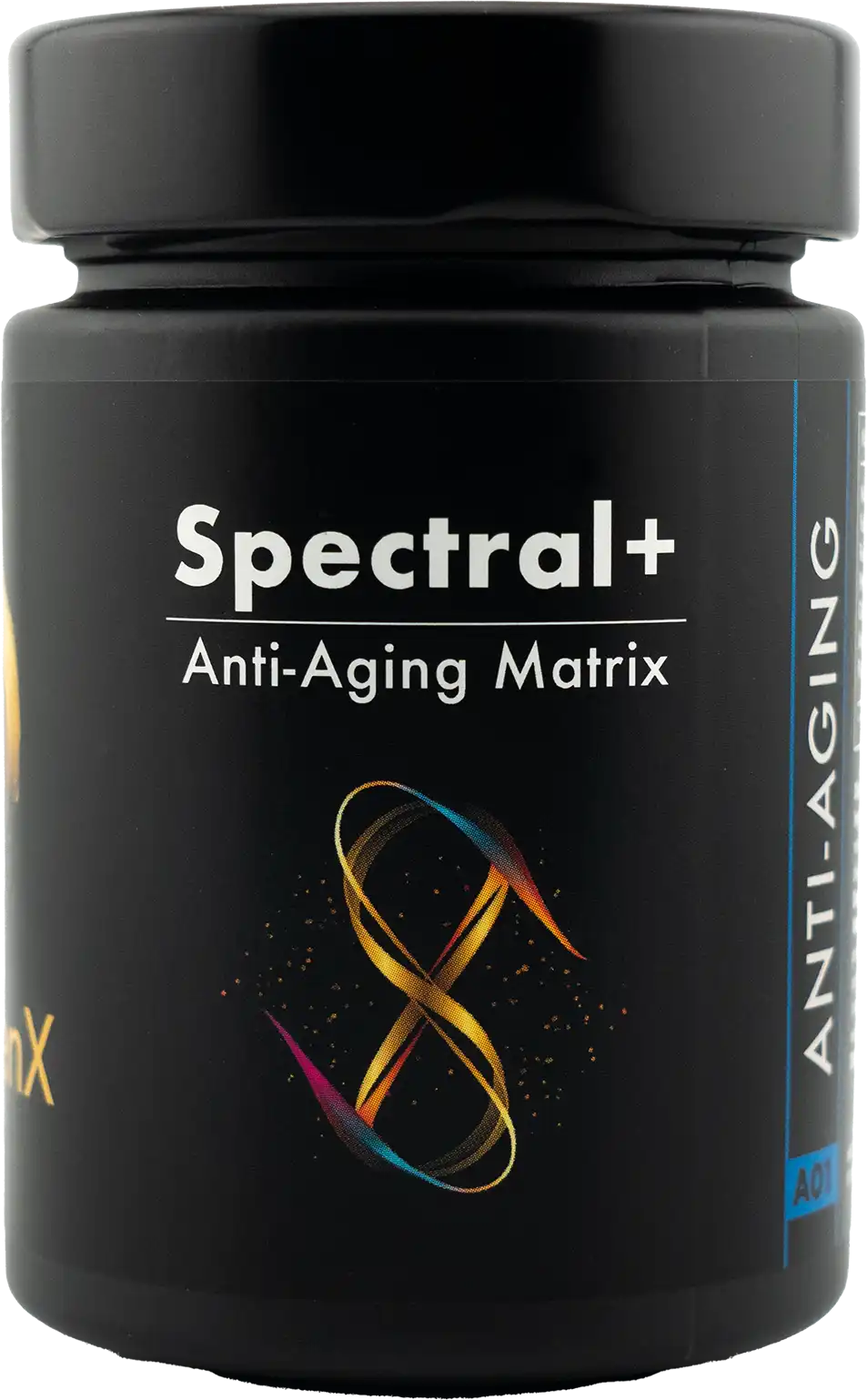
Spectral+: a new era in anti-aging
Spectral+ uniquely combines the most important ingredients. When selecting the ingredients, the main criteria were scientific evidence, effectiveness, safety, and creating synergy. Spectral+ is not just a dietary supplement—it is our commitment to health and longevity.
Active ingredients (per daily serving)
- Nicotinamide riboside, NR (300 mg)
- Bioactive folate, 5-MTHF (400 mcg)
- Resveratrol (250 mg)
- Pterostilbene (100 mg)
- Quercetin (350 mg)
- Apigenin (100 mg)
- Black pepper extract, piperine (20 mg)

Dosage
Recommended dosage is 3 capsules per day, preferably taken in the morning or at noon, with a meal.
Other notes
We emphasize that the product and the information found on our websites are not intended to diagnose, treat, cure, or prevent diseases, and do not replace a varied and balanced diet and a healthy, active lifestyle. When using the product, it is important to note that although studies support the benefits of the formula, results may vary from person to person. Everyone’s body is different, and therefore responses can vary. We recommend that you consult your physician or healthcare professional before using the product, especially if you have existing medical conditions or questions related to medications.